The Intersection One
When Twins Lose Each Other: Why Middle-Grade Readers Need Stories About Hard Thing
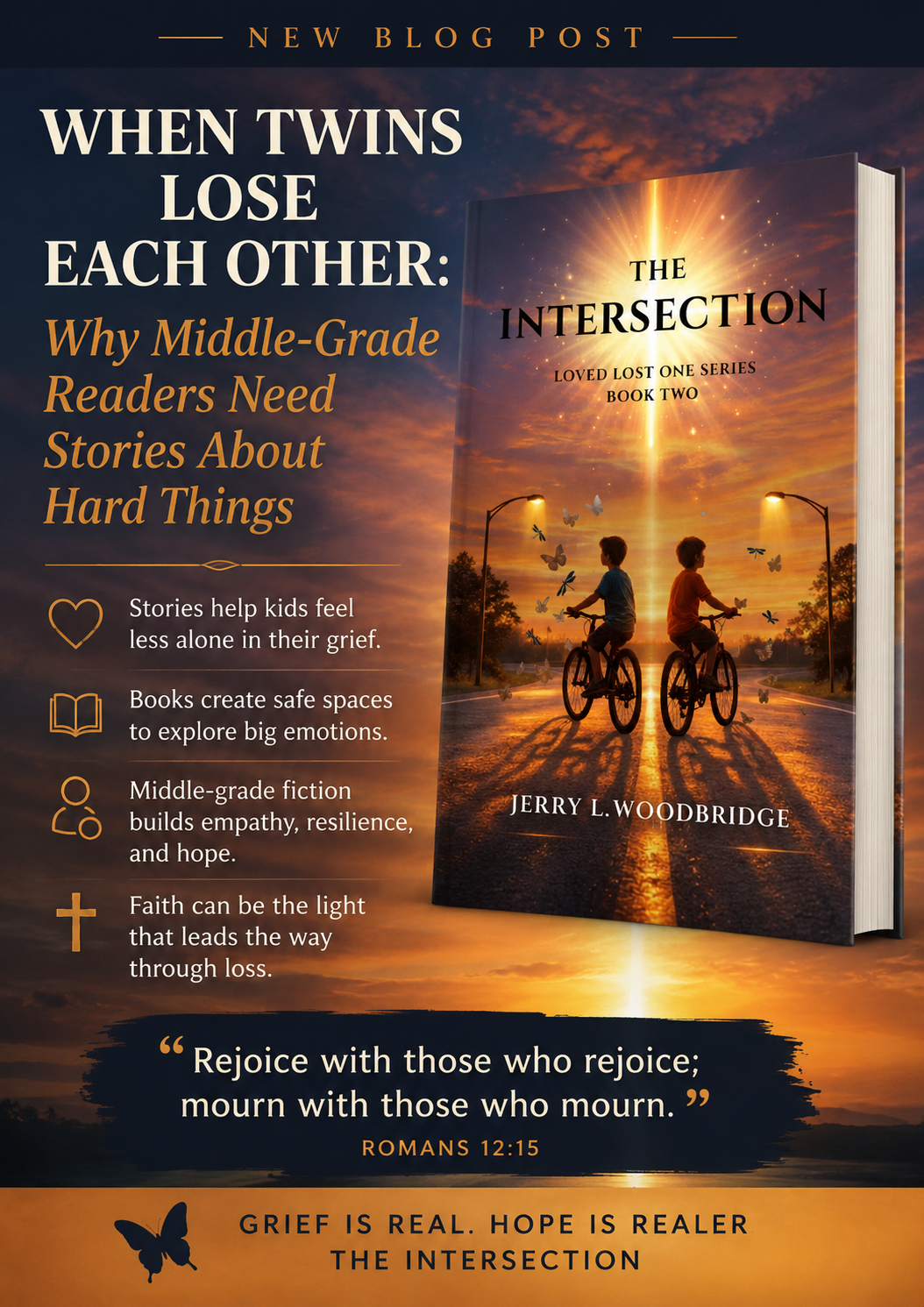
The Intersection ~ One
“Rejoice with those who rejoice; mourn with those who mourn.” — Romans 12:15
There are some losses that people immediately recognize. The loss of a parent. The loss of a grandparent. The loss of a friend. However, there is another kind of grief that often goes unseen: the loss experienced when one twin loses the other.
Twins share something that is difficult to describe to anyone who has not lived it. They often grow together before they ever take their first breath. They celebrate birthdays together, experience milestones side by side, and spend years answering to “the twins.” When one twin dies, the surviving twin doesn’t simply lose a sibling. They lose a part of the life they always expected to have.
The Grief Few People Understand
People naturally gather around families after a tragedy. They comfort parents. They hug siblings. They attend memorial services and bring meals. Yet, few people know what to say to the surviving twin.
Many assume they are “strong.” Others avoid talking about the loss altogether because they fear saying the wrong thing. Yet the surviving twin often carries questions that can last for years. “Why wasn’t it me?”“Who am I without my twin?”“Will people always compare me to the one I lost?” These questions can become overwhelming when children feel they must carry them alone.
Survivor’s guilt, anxiety, sadness, anger, and confusion are common responses after traumatic loss. Children may struggle to explain emotions they do not fully understand. Without compassionate adults willing to listen, those feelings can remain buried beneath silence.
Why Children Need Stories About Hard Things
Many adults want to protect children from painful topics and that desire comes from love. Yet protecting children from difficult conversations is not the same as preparing them to face difficult realities.
Every classroom includes children who have experienced loss. Every church has families carrying grief. Every neighborhood has children whose lives have changed in ways their classmates cannot see.
Books give children something powerful: They remind them they are not alone. Stories create safe spaces where young readers can explore difficult emotions through characters who feel authentic. They help children recognize that grief is not something to “fix” but something we learn to carry with hope.
Research consistently shows that bibliotherapy, the use of literature to support emotional healing can help children identify feelings, build empathy, strengthen emotional vocabulary, and encourage healthy conversations about loss. A well-written story becomes more than entertainment. It becomes a companion.
Why Middle-Grade Fiction Matters
Children between the ages of 8 and 13 are asking big questions. Why do bad things happen? Can life ever feel normal again? Where is God when someone dies? Who am I becoming?
Middle-grade fiction is uniquely positioned to explore these questions with honesty and hope. Readers at this age are developing empathy, emotional awareness, and resilience. They don’t need stories that pretend life is always easy. They need stories that acknowledge pain while pointing toward healing. They need characters who are brave enough to ask difficult questions and adults who are willing to read alongside them.
The Heart Behind The Intersection
These convictions inspired me to write The Intersection. Without revealing the story, this novel explores what happens when one twin must navigate life after an unimaginable loss. It examines grief, survivor’s guilt, friendship, faith, counseling, family relationships, and the slow, often uneven journey toward hope.
The goal was never to write a book about tragedy. The goal was to write a book about healing. I wanted young readers to see that grief does not define their future. Even after heartbreaking loss, they can continue growing, loving, believing, and discovering purpose.
For parents, educators, counselors, pastors, and caregivers, I hope this story becomes an invitation to meaningful conversations that children often struggle to begin on their own.
What Adults Can Do
If you know a grieving child, remember that your presence matters more than perfect words.
Listen without rushing.
Allow questions.
Accept tears.
Share hope without dismissing pain.
Most importantly, remind children that grief is not a sign of weakness. It is evidence of love.
Hope at the Crossroads
Life sometimes brings us to unexpected intersections where childhood, grief, faith, and hope meet. Those moments are painful, but they can also become places where healing begins. No child should have to walk through grief alone. Sometimes, the first step toward healing begins with opening a book and discovering that someone else understands. That is my prayer for every reader of The Intersection.
May they find courage in the story, hope in the journey, and the assurance that even after life’s deepest losses, God is still writing a beautiful future.
Reflection Questions
How can we create safer spaces for children to talk honestly about grief?
What books helped you navigate difficult seasons as a child?
How can parents, educators, churches, and communities work together to support grieving children?
Who in your life might simply need someone willing to listen today?
About the Author
Dr. Jerry L. Woodbridge is an award-winning Christian author, speaker, and advocate for grieving children and families. Through her books and speaking ministry, she equips parents, educators, counselors, and ministry leaders with practical, faith-centered tools to help children navigate grief with courage, compassion, and hope. The Intersection continues her mission of helping young readers discover that even in life’s darkest moments, God is present, healing is possible, and hope still has the final word.
