The Intersection Four
Parent Focus: How to Talk to Kids About Grief: A Practical Guide for Parents and Teachers
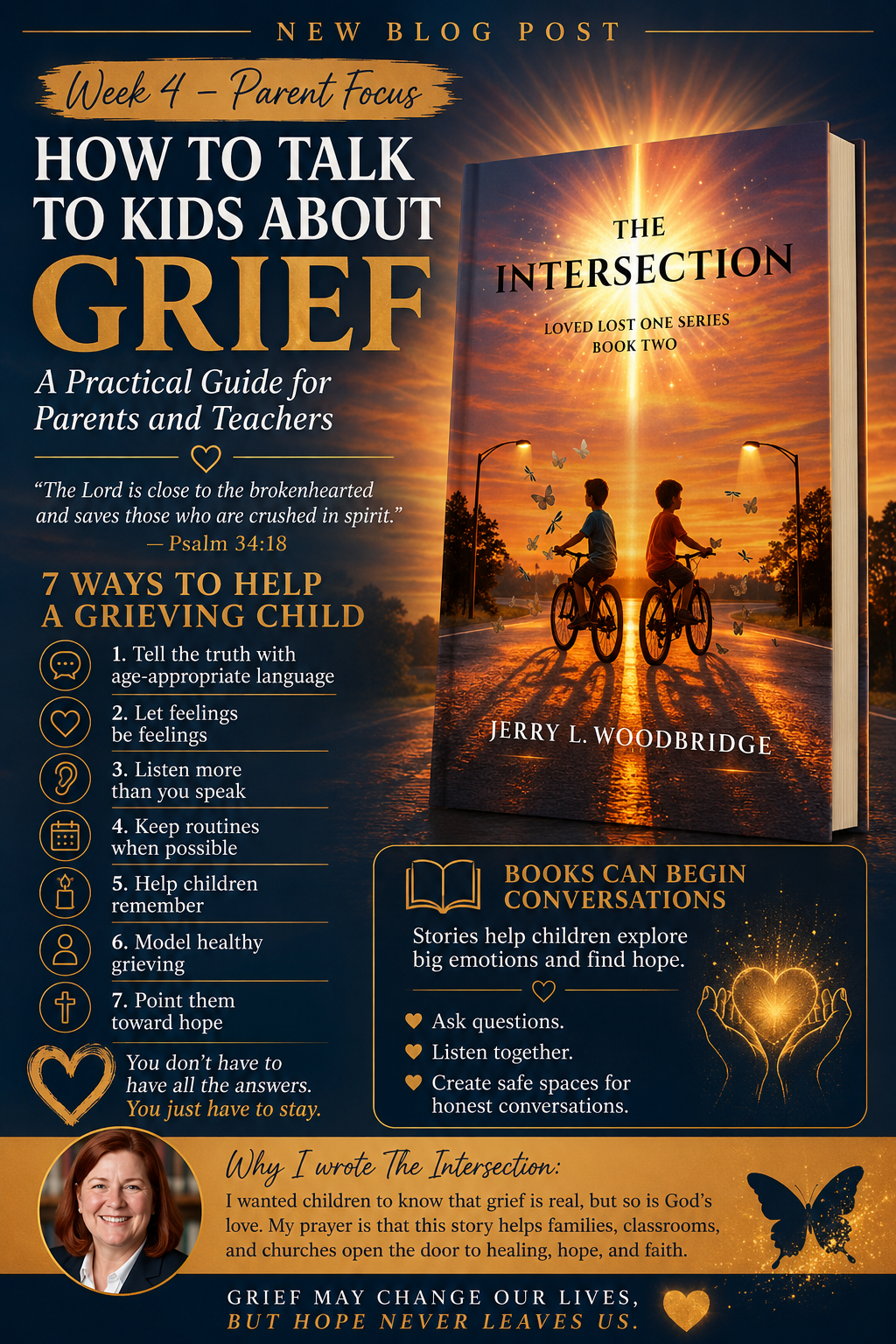
“The Lord is close to the brokenhearted and saves those who are crushed in
spirit” — Psalm 34:18
Whatever it is, the way you tell your story online can make all the difference.
One of the hardest conversations adults ever have had is talking to a child about death. We want to protect them. We want to take away their pain. We want to have all the answers, but grief doesn't require perfect words. It requires caring adults who are willing to be present.
Whether you're a parent, grandparent, teacher, school counselor, children's ministry leader, or coach, your response can help a child feel seen, safe, and supported during one of the most difficult seasons of life.
Remember: Every Child Grieves Differently
There is no "right" way to grieve. Some children cry openly. Others become unusually quiet. Some ask the same questions again. Others seem unaffected at first, only to express their grief weeks or months later.
You may notice changes in sleep, appetite, concentration, school performance, or behavior. Younger children may become clingy or regress to earlier behaviors, while older children may withdraw or struggle to express their emotions.
Grief is not a straight path, and children often move in and out of their emotions as they grow and better understand what has happened. The goal isn't to make grief disappear. The goal is to help children know they don't have to carry it alone.
Seven Ways to Help a Grieving Child
1. Tell the Truth—With Age-Appropriate Language
Children deserve honest answers. Avoid confusing phrases such as:
"They went to sleep."
"We lost them."
"God needed another angel."
These expressions can create fear or misunderstanding.
Instead, use simple, clear language that matches the child's developmental level. Allow questions and answer them honestly. It's perfectly acceptable to say, "I don't know," when you don't have an answer. Children need trustworthy adults more than they need perfect explanations.
2. Let Feelings Be Feelings
Children may experience sadness, anger, fear, guilt, relief, confusion, or even moments of laughter. All these emotions are normal. Resist the urge to tell them to "be strong" or "don't cry." Instead, try saying:
"I'm glad you told me."
"It's okay to miss them."
"I'm here with you."
"You don't have to go through this alone."
Validation creates emotional safety.
3. Listen More Than You Speak
Adults often feel pressure to fill silence. Children rarely do. Sometimes the greatest gift you can give is your full attention. Listen without interrupting, correcting, and without trying to fix the pain. Children remember how safe they felt long after they forget exactly what was said.
4. Keep Routines When Possible
Grief changes life, but familiar routines provide stability. Regular mealtimes, school schedules, bedtime rituals, family traditions, and extracurricular activities remind children that although life has changed, not everything has disappeared. Consistency builds security during uncertain times.
5. Help Children Remember
Healing does not require forgetting. Invite children to share stories. Look through the albums of photographs together. Create a memory box. Plant a tree. Write letters. Celebrate birthdays and special memories. Healthy remembrance allows love to continue while helping children integrate loss into their lives.
6. Model Healthy Grieving
Many adults hide their tears because they worry children will become frightened. Children often benefit from seeing healthy expressions of emotion. When appropriate, let them know:
"I miss them too." "I feel sad today." "I'm praying for God's comfort."
Children learn that grief and hope can exist together.
7. Point Them Toward Hope
Hope doesn't erase sorrow. Hope reminds us that sorrow is not the end. For families of faith, Scripture offers reassurance that God remains close during seasons of loss. Remind children that God welcomes every question, every tear, and every prayer: even the ones spoken through silence.
Faith is not about pretending everything is okay. Faith is trusting that God walks beside us when it isn't.
Books Can Begin Conversations
Children often find it easier to talk about difficult emotions through the experiences of a fictional character. Stories provide emotional distance while helping readers recognize feelings they may not yet know how to express. Reading together creates natural opportunities to ask questions like:
"How do you think that character felt?"
"Have you ever felt something similar?"
"What helped them begin healing?"
"What do you think gave them hope?"
Some of the most meaningful conversations between adults and children begin after the final page of a book.
Why I Wrote The Intersection
As both an educator and an author, I recognized a need for stories that speak honestly about grief while offering hope. I wanted children to meet characters who ask difficult questions, struggle with painful emotions, and slowly discover that healing is possible.
The Intersection explores grief through the eyes of a twelve-year-old boy whose life changes in an instant. Rather than offering easy answers, the story invites readers into honest conversations about loss, survivor's guilt, friendship, faith, and resilience.
My hope is that families, classrooms, counseling offices, and church groups will use the story as a bridge to conversations that children sometimes struggle to begin on their own.
You Don't Have to Have All the Answers
One of the greatest myths about grief is that adults must always know what to say. The truth is this: Children are not looking for experts. They are looking for someone who will stay. Someone who will listen and remember. Someone who will remind them that they are deeply loved.
When we offer our presence with patience, compassion, and hope, we give grieving children something they need most: The confidence that they will never have to walk through their grief alone.
Reflection Questions
Is there a child in your life who may be carrying grief quietly?
How can you create more opportunities for honest conversations about loss?
What routines or traditions can help a grieving child feel safe?
How can your family, classroom, or church become a place where children know it's okay to grieve and okay to hope?
About Dr. Jerry L. Woodbridge
Dr. Jerry L. Woodbridge is an award-winning Christian author, educator, speaker, and advocate for grieving children and families. Through her books, speaking engagements, and educational resources, she equips parents, educators, counselors, and ministry leaders with practical, faith-centered strategies to help children navigate grief with compassion, resilience, and hope. Her middle-grade novel, The Intersection, encourages meaningful conversations about loss, healing, and God's enduring presence in the lives of young readers.
