The Intersection Three
Faith, Loss, and Twelve-Year-Olds: Writing the Book I Wished Existed
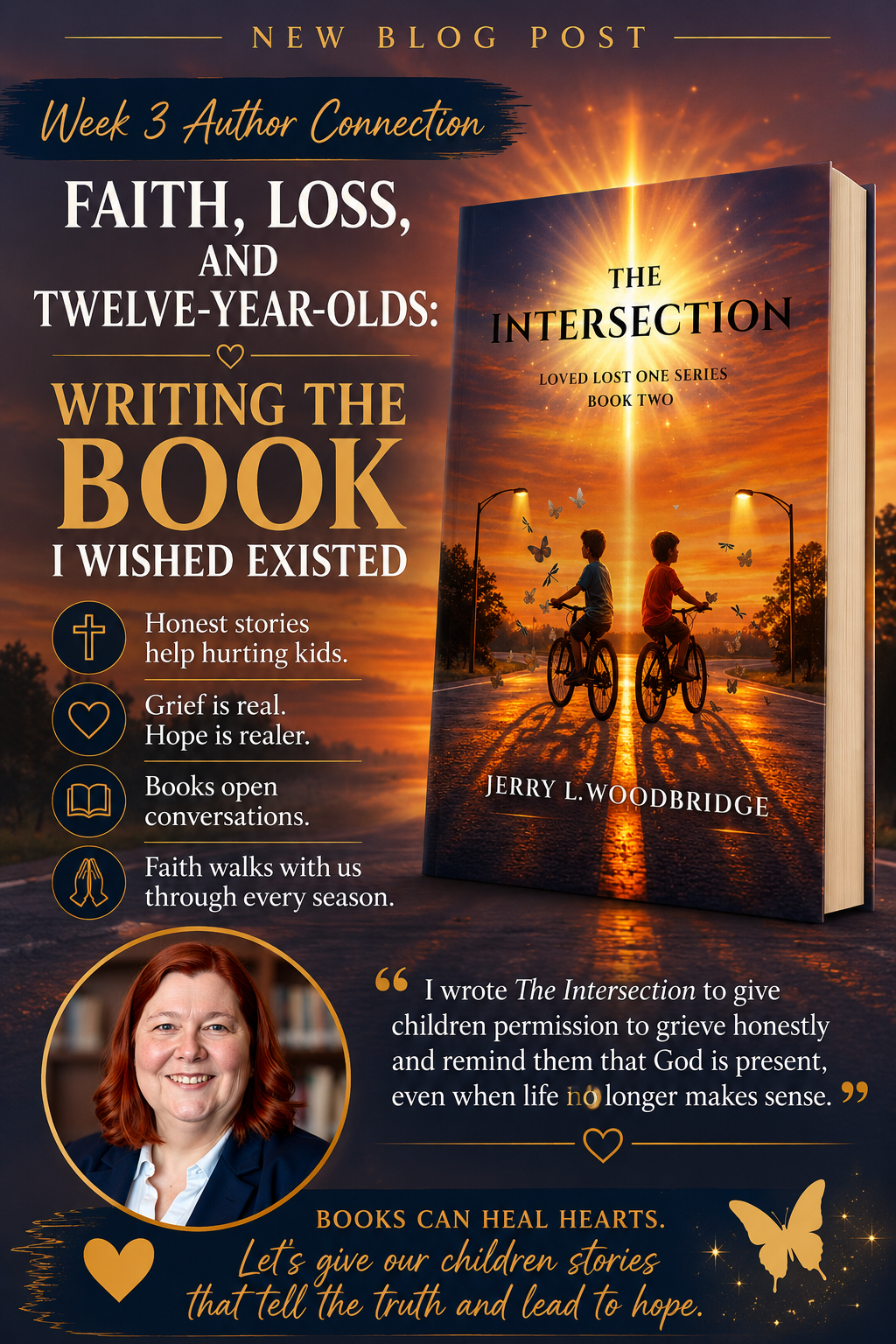
Some books are planned. Others are born from a burden.
The Intersection began as the second kind.
As an educator, author, widow, and follower of Christ, I have spent years listening to stories of loss. I've watched children sit quietly in classrooms after the death of someone they loved. I've met families trying to find words that simply didn't exist. Repeatedly, I found myself asking the same question: Where are the stories that tell children the truth about grief while also giving them hope?
I wanted to place one of those stories into their hands. Not a story that minimizes pain. Not one that rushes children toward a happy ending, but one that gently reminds them that God is present, even when life no longer makes sense.
I love how authentic children are and how they ask profound questions. Why did this happen? Will life ever feel normal again? Does God still love me? Is it okay to laugh again?
Adults sometimes hesitate to answer because we don't want to say the wrong thing. Stories can help. A story allows children to borrow courage from a character who feels what they feel. It gives them language for emotions they cannot yet explain. It begins conversations that might never happen otherwise.
That is why I wrote The Intersection. Although the novel centers on the unimaginable loss experienced by one surviving twin, it speaks to every child who has ever experienced heartbreak. Grief wears many faces. The death of a parent. The loss of a sibling. The loss of a grandparent or a friend.
Divorce. Moving away. Unexpected change. Children carry these experiences every day, often without adults realizing the weight they bear.
As Christians, we know our hope is anchored in Christ. Yet we also know that faith does not erase sorrow. Jesus Himself wept for the friend he loved Lazarus.
Scripture never tells us to pretend grief doesn't exist. Instead, it reminds us that God is close to the brokenhearted and faithful through every season. That is the message I wanted woven throughout every chapter. Not easy answers but enduring hope.
If a child finishes The Intersection believing that their tears matter to God, then the story has accomplished its purpose. If a parent begins a meaningful conversation because of something they read together, the story has accomplished its purpose. If a teacher recognizes the quiet child who has been carrying invisible grief, the story has accomplished its purpose.
Books have always shaped hearts. I pray this book helps them heal. Thank you for joining me on this journey. May we continue creating spaces where children are free to ask difficult questions, where faith and grief are allowed to coexist, and where hope is always invited into the conversation.
Because even at life's most difficult intersections, God is already there, waiting to lead us forward.
— Dr. Jerry L. Woodbridge
