The Intersection Two
The Story Behind The Intersection: A Conversation with Dr. Jerry L. Woodbridge
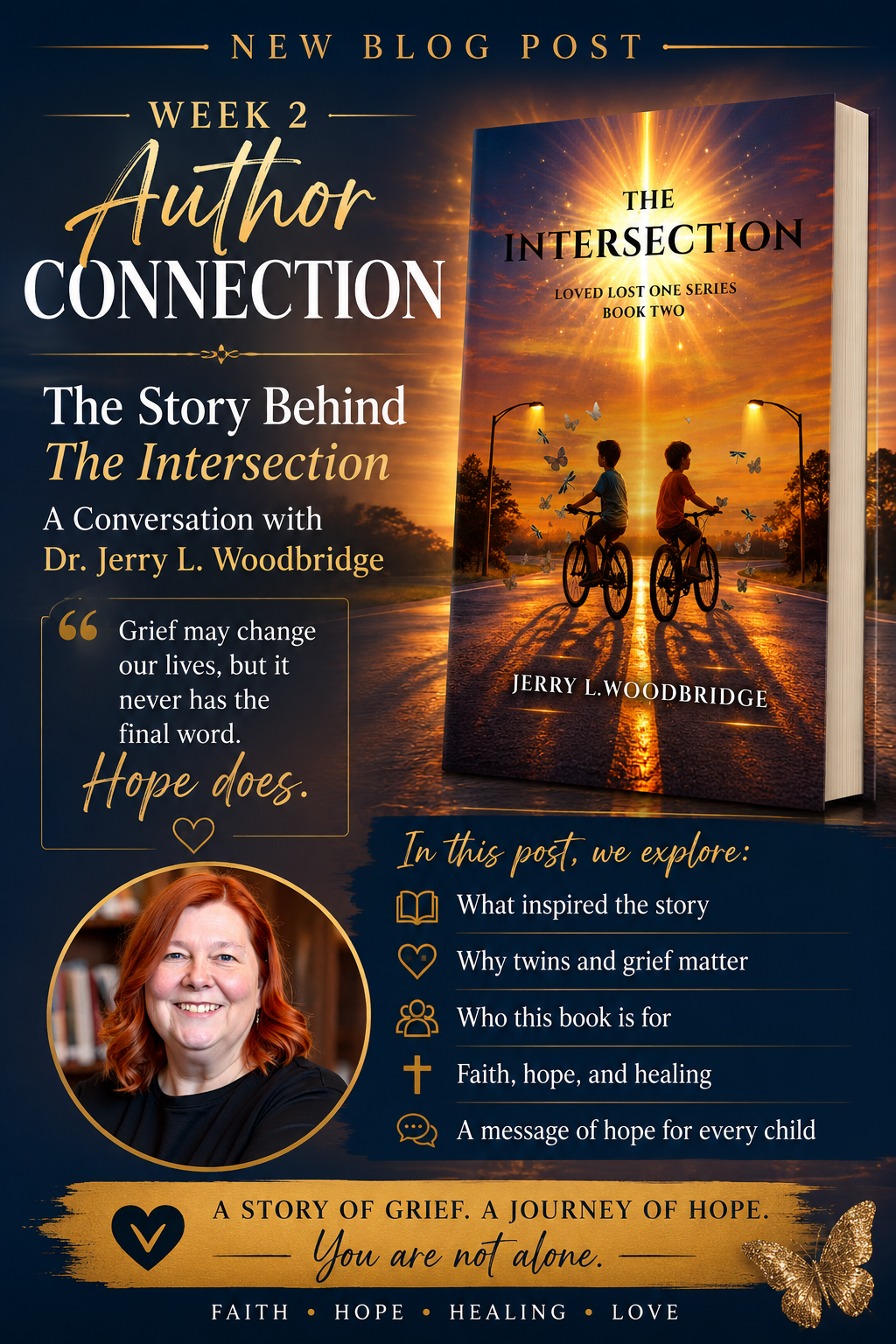
Every book begins with a question. For The Intersection, the question was simple yet profound: How do we help children find hope when their world changes forever?
Today, I'd like to answer a few of the questions readers have asked about the heart behind this story.
Q: What inspired you to write The Intersection?
Jerry: Throughout my life, I have walked alongside people experiencing grief. As a widow, an educator, and an author, I have witnessed how loss affects every member of a family, including the children who are often expected to "be okay" long before they truly are. I wanted to write a story that gave children permission to grieve honestly while reminding them that grief is never the end of their story.
Early in my teaching career, I was teaching a grade level below a set of twin boys. Tragedy struck in the form of a car hitting one of the twins riding their bike along the highway. That twin boy died. I have often wondered how that young man recovered from it. I have written the story in hopes that this young man found supportive friends, family, and even a safe person to talk to when the grief becomes unbearable.
Q: Why did you choose to write about twins?
Jerry: The relationship between twins is extraordinary. They share a bond that many people admire but few truly understand. When one twin dies, the surviving twin experiences more than the loss of a sibling. They lose someone who has shared every stage of life with them. That unique kind of grief deserves understanding, compassion, and hope.
Although The Intersection focuses on twins, emotions of grief are universal. Anyone who has experienced significant loss can recognize the feelings of confusion, sadness, fear, and eventually, healing.
Q: Was this story difficult to write?
Jerry: Very much so. There were chapters that required me to pause because they touched deeply personal emotions. Writing honestly about grief means allowing yourself to revisit places that are painful. Yet I also discovered something beautiful and authentic. Hope has a way of appearing even in the hardest stories. That became one of the central messages of The Intersection.
Q: Who is this book written for?
Jerry: First and foremost, it is written for middle-grade readers, especially those navigating grief, change, or questions about life and faith. But I also wrote it for parents, grandparents, teachers, school counselors, children's ministry leaders, and for anyone searching for a way to begin conversations that children often don't know how to start themselves.
Q: What do you hope young readers take away?
Jerry: I hope they discover three things.
First, they are not alone.
Second, grief is not something to be ashamed of.
And finally, healing does not mean forgetting.
Love continues. Memories remain. Hope grows.
Q: Faith is woven throughout the story. Why was that important?
Jerry: Because faith has been woven throughout my own journey. Faith doesn't remove grief. It gives us strength to walk through it.
Children deserve stories that don't ignore hard questions. They deserve stories that acknowledge pain while pointing them toward hope found in God's love. That balance was incredibly important to me.
Q: If you could say one thing to a grieving child, what would it be?
Jerry: Your story is not over. The pain you feel today will not always feel this heavy. There will be laughter again. There will be joy again. There will be purpose again and God will walk beside you every step of the way.
Final Thoughts
My prayer is that The Intersection becomes more than a novel. I hope it becomes a conversation starter. A bridge between children and the adults who love them. A reminder that grief may change our lives, but it never has the final word. Hope does. Thank you for allowing me to share this journey with you.
— Dr. Jerry L. Woodbridge
