How Children Process Death at Different Ages

The universe will never be the same when someone dies. Especially for children, the experience catapults them to a new level of reality, understanding, patience, and sorrow. While a child cannot process profound loss at a young age, they still feel the effect and pain. For adults, taking time to comprehend the changes matters.
For different people, understanding how children process death requires a compassionate exploration of developmental stages, cognitive abilities, and emotional capacities. And so, this guide provides caregivers, parents, guardians, educators, and supporters with age-specific insights into a child’s grieving process.
Why Children Process Death Differently from Adults
How Brain Development Affects Grief
The permanence and finality of death are foreign and difficult concepts for a child. Unlike how adults process the irrevocability of death, children see it as a temporary moment.
The cognitive abilities required to understand the five biological subcomponents of death—inevitability, universality, irreversibility, cessation, and causality—emerge at different rates throughout childhood. Because of this, children may appear to move quickly between strong emotions. In one moment, they are lonely and saddened, and at another point, their attention is somewhere else.
In a way, this kind of movement between emotions prevents kids from feeling overwhelmed by everything happening around them.
Why Children May Grieve in Waves
A child’s grieving process is not a linear, one-point pathway. Rather, it is a process that unfolds in waves. Children take "grief breaks" because they can only process so much information at a time.
Indifference or a carefree attitude exhibited by the child is actually a self-protective measure that gives them time to comprehend their new reality and grieve at their own pace.
For children, understanding death is an ongoing process. Often, they revisit their grief at different developmental stages as their capacity to understand the loss matures. Parents, guardians, and educators should not rush the process. The usual grief stages are not meant for children.
How Children Process Death by Age
Infants and Toddlers (0-3 Years)
Infants do not recognize death, but they are acutely sensitive to the emotions of their caregivers. So, children who have been separated from their primary attachment figure may become sluggish and quiet, show physical symptoms like weight loss, and sleep less. For toddlers, the concept of death is largely absent. In this case, their distress is rooted in separation anxiety and the disruption of their routines.
What Grief Looks Like: Crankiness, decreased activity, poor sleep, weight loss, and a general sense of distress. Additionally, they may become more clingy or irritable.
How to Help: The most important support for infants and toddlers is maintaining a consistent, comforting routine as much as possible. Provide extra physical comfort and reassurance through holding, cuddling, and calm voices. Be aware that your own grief will affect them, so try to find support for yourself as well.
Preschool Children (3-5 Years)
Growing kids, particularly preschool children, see death as temporary and reversible. They often confuse death with sleep and may believe the dead person continues to live and function in some ways, even when they don’t actually see it. This is also the age of "magical thinking," where children may believe their own thoughts or wishes caused the death.
What Grief Looks Like: Asking many repetitive questions ("When is Mommy coming back?"). Problems with eating, sleeping, bladder or bowel control, and general confusion and distress. At times, they may be afraid of being left alone or have tantrums.
How to Help: Use simple, concrete, and honest language. Say, "He died. It means his body stopped working, and he won't come back." It’s important that the speaker avoid euphemisms like "went to sleep" or "passed away" when talking to children, as these phrases can be confusing and frightening—adding more chaos to their developing minds.
School-Age Children (6-12 Years)
By the time children enter school, they begin to understand that death is permanent and final. However, they may still think of death as a person or spirit, such as a skeleton or ghost. They are curious about death and may ask specific questions about what happens to the body. Often, they see death as something that happens to others, especially the elderly, and not to themselves.
What Grief Looks Like: During this time, they express their grief through behavior, as words may not suffice. Therefore, a children's book about grief and loss can be a helpful tool for opening conversations and providing a shared language for their emotions. They may have fears about school, show aggressive behavior (especially in boys), or worry about imaginary illnesses.
How to Help: Be prepared to answer their many questions honestly and directly. Allow them to express a range of feelings—sadness, anger, confusion—without judgment. Encourage them to draw, write, or play as a way of processing their feelings, as play is one of the most important ways children learn about the world around them.
Teenagers (13-18 Years)
In this age, things have become different. Teenagers have the capacity to understand death in the same ways adults do. They know that everyone will die and that death is final. However, they may not show their sadness openly in the way adults might expect. Their grief may manifest as anger, withdrawal, or risk-taking behaviors as they struggle with their developing identity and their need to be independent.
What Grief Looks Like: Withdrawal from family, a preference for grieving with peers, intense sadness, denial, anger, risk-taking behavior, and a fear of being different from their friends. They may struggle with the question of why people die and the meaning of life.
How to Help: Do not pressure them into starting a conversation—it kills the opportunity to have them open up to you willingly. Give them space to process their grief, but let them know you are available to listen when they are ready. Encourage them to talk with peers or a trusted adult outside the family, such as a school counselor. Do not try to take their grief away or minimize their pain; instead, respect their coping mechanisms while being available for support.
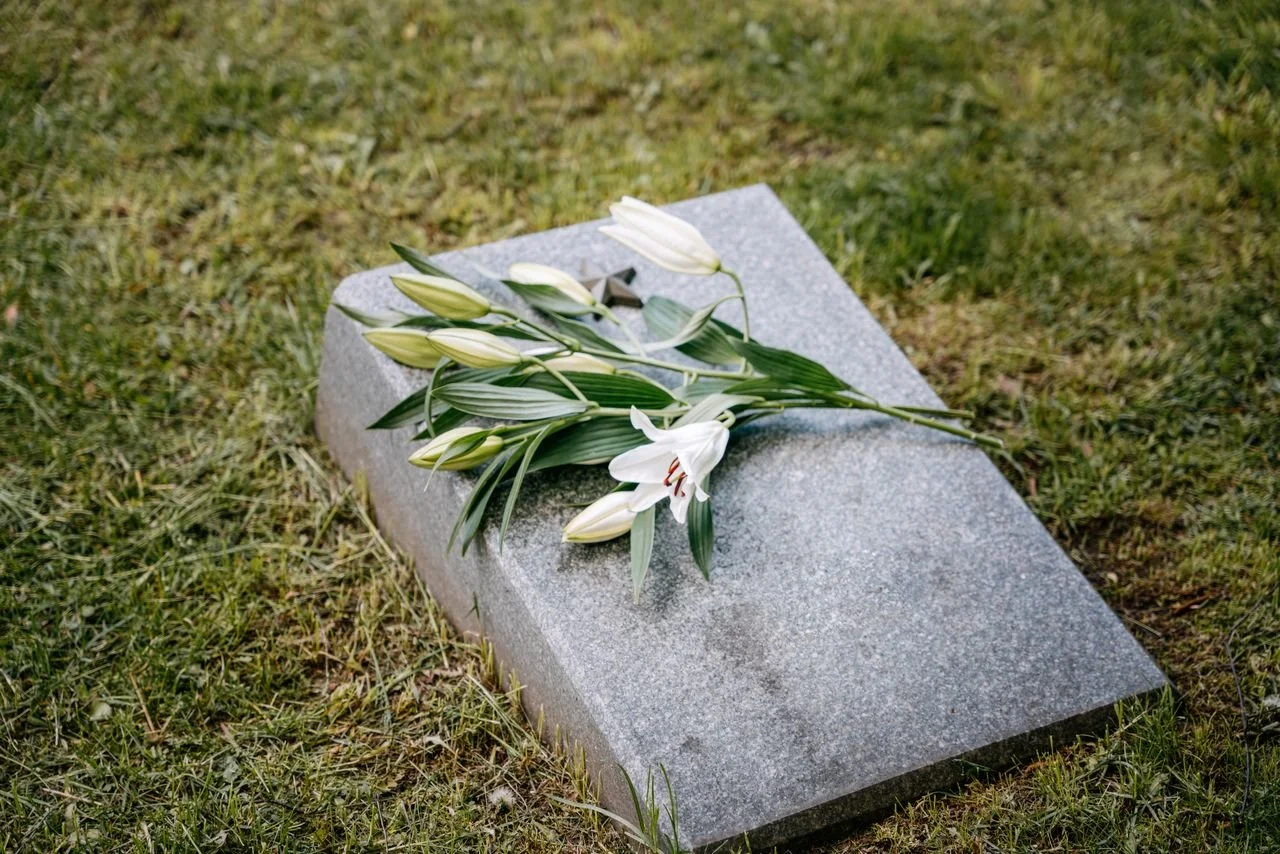
A tombstone with lilies on top | Image Source: Pexels
An Honest Look at Death
Children process death differently at every age, and there is no single "right" way to grieve. Instead of seeing the moment as a way to correct the reaction, parents or guardians are encouraged to grieve alongside the child, holding their hand and reassuring them along the way.
If you are a parent, sibling, educator, or tutor looking for guides on how to support children going through grief and pain, Joy Overcame Sorrow by Jerry Woodbridge is an award-winning book that offers a reflective and honest take on grieving. From its compassionate words and soothing verses, children will feel relief and comfort. Grab a copy of this incredible novel today.
If your child likes to write and journal, consider adding Joy’s Journal to your order as it takes book prompts from the book and includes personal prompts for each child as they navigate their own grief.
Don’t forget to click the link below to learn more about Dr. Jerry Woodbridge right now.
Joy Overcame Sorrow is the first book in the Loved Lost One series. The second book, The Intersection, is now available in paperback and Kindle format.